


If you are searching for "SEO for small business near me," you have probably been told it is a magic bullet or a complete waste of money. Both are wrong. The reality of finding the right SEO for a small business near me is that most agencies are selling yesterday’s playbook. In 2026, the search landscape has shifted dramatically. Google now answers more queries directly on the results page through AI Overviews and Local Packs, meaning fewer people click through to websites. That sounds terrifying, but it is actually an opportunity. If you know how to position your business as the answer Google wants to show, you win. Here is what actually works in 2026, and what you should stop doing today.
Why Your "Near Me" Search Is Changing Everything (And Nothing)
The zero-click reality is here. In 2026, Google resolves a massive portion of local queries without the user ever visiting a website. They see your star rating, your hours, and your phone number right in the search results. If you are measuring success by website traffic alone, you are missing the point. The metric that matters is the phone ringing and the door swinging open.
Local intent is non-negotiable. A staggering 76 percent of people who perform a "near me" search on their smartphone visit a physical business within 24 hours. This is not just about ranking in the blue links. It is about dominating the Local Pack, the map section that sits at the top of the page. If you are not there, you are invisible.
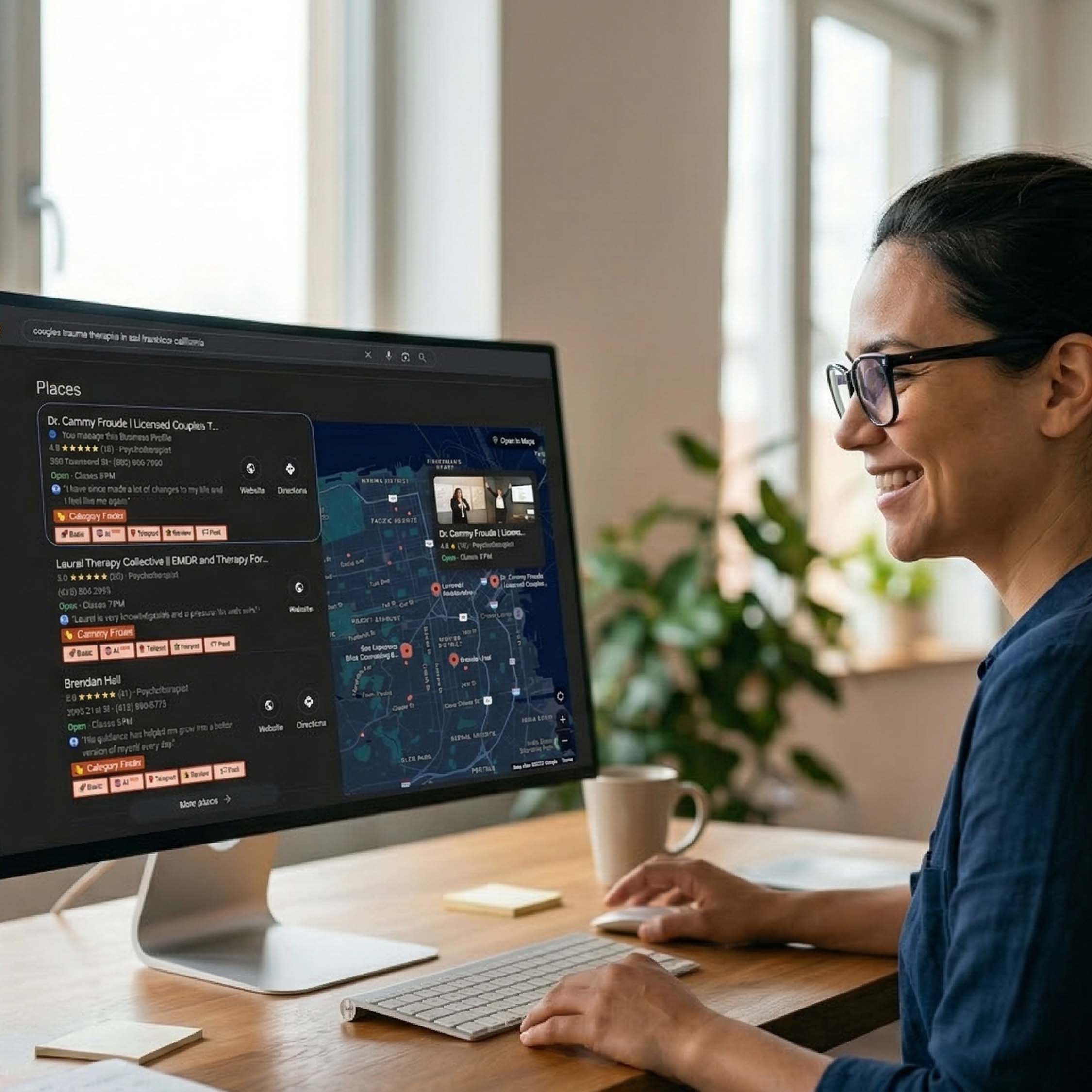
You have probably seen the question floating around forums: "Is SEO dead or evolving in 2026?" Let us be direct. SEO is not dead. The game has simply changed. It has shifted from a technical trick of keyword stuffing to a battle of authority signals in local search results. Google now prioritizes review sentiment, NAP consistency, and local backlinks over old-school density tactics.
There is a trap you need to avoid. A quick search for providers reveals a saturated market. In a single local area, you can find 88 or more SEO service providers listed on marketplaces like Thumbtack. Hiring an SEO agency is easy. Hiring a good one, one that understands the 2026 algorithm, is incredibly hard. This saturation is exactly why you need a clear framework before you spend a dollar.
The 5-Step Local SEO Framework for 2026
Step 1: Stop Obsessing Over Keywords—Start Obsessing Over "Entity" Signals
Here is the polarizing truth that most local guides will not tell you. Generic keywords like "plumber" or "best bakery" are dead for small businesses. Google no longer needs to match the words on your page to the query. It understands entities. Your business is an entity. Google connects your name, address, phone number, and category to the search intent. If those signals are confused, your ranking in local search results collapses.
This is where the "Don't Be Napping on Your NAP" rule comes in. Your Name, Address, and Phone number must be identical across Yelp, Apple Maps, Facebook, Bing, and your website to build trust with search engines. A single mismatch, like an old suite number or a disconnected tracking phone line, can tank your Local Pack ranking. Google sees inconsistency as a trust issue.
If you serve multiple areas, do not just list them in a footer. Create dedicated city-specific landing pages. A page titled "SEO for small business near Laurel, DE" is a high-impact tactic most of your competitors are too lazy to build. It signals deep relevance to a specific geographic area, which is exactly what the algorithm wants to reward.
Step 2: Google Business Profile (GBP) Is Your New Homepage
For local search in 2026, your Google Business Profile is more important than your actual website. You must optimize for "no-click" success. A user should be able to decide to call you without ever leaving the search results. Use the Q&A section to preemptively answer the top five questions you get asked. Post weekly updates about your services. If your GBP is static, it is dead.
Photo and video frequency is a direct ranking signal for local SEO strategy. Google rewards active profiles. You do not need a professional camera crew. A weekly photo of your team working, your truck, or your finished product signals that you are a real, operational business. This freshness factor pushes you above competitors who set up their profile three years ago and forgot about it.
Review velocity is your new battleground. Positive reviews are the second most important local ranking factor after proximity. You need a system to ask for reviews after every single transaction. Send a polite text or email with a direct link. Do not buy reviews. Google’s AI detection for fake patterns is ruthless in 2026, and a review ban is nearly impossible to recover from. A 4.5-star rating with 50 real reviews beats a perfect 5-star rating with 5 reviews every time.

Step 3: Build Local Backlinks (The Right Way)
A link from your local Chamber of Commerce is table stakes. It is the minimum requirement. To actually move the needle, you need to go deeper. Sponsor a Little League team, partner with a local nonprofit for an event, or get interviewed by a local news site. These links carry geographic authority that no generic directory can match.
You need a competitive gap analysis. Use a tool like Ahrefs or BrightLocal to see who is linking to your competitors. If a local lifestyle blog has a "best of" list that links to three other plumbers but not you, pitch them a story. You already know they are willing to link to businesses in your niche. You just need to give them a reason to choose you.
Avoid the temptation of spammy directories. Fifty low-quality links from sites that exist only to sell links will hurt you more than five high-quality ones. Focus on relevance, not volume. A single link from a respected local institution is worth more than a hundred from a generic SEO farm.
Step 4: Technical SEO That Actually Matters for Local
You do not need to be a developer, but you do need to understand schema markup. Implementing the LocalBusiness schema on your site is non-negotiable. This is a code that tells Google your hours, services, and location in a language it understands natively. Without it, you are asking Google to guess what your business does.
Mobile speed is a direct ranking factor. Sixty percent of "near me" searches happen on a mobile device, often on a shaky 5G connection. If your site takes longer than three seconds to load, you lose the click. The user hits the back button and picks the next plumber in the Local Pack, impacting your search visibility. Compress your images and cut the bloated plugins.
Voice search optimization is no longer a futuristic concept. In 2026, it is mainstream. People ask their devices conversational questions. They say, "Hey Siri, who offers the best SEO for small businesses near me?" instead of typing "SEO small business." Your content needs to mirror that natural, question-based language to capture voice traffic.
Step 5: Track What Actually Moves the Needle
Stop obsessing over vanity metrics. Tracking your ranking for a single keyword is a fool’s errand in a personalized search world. Instead, track phone calls, direction requests, and website clicks directly from your Google Business Profile insights. These are the actions that pay the bills for local businesses.
Use tools like BrightLocal or SEMrush to monitor your Local Pack performance and competitor movements monthly. You need to know if a competitor suddenly gains twenty reviews or adds a new service category.
The 6-month rule is the most truth we can give you. Local SEO is not a sprint. If an agency promises you the top spot in 30 days, they are selling paid ads, not a legitimate local SEO strategy. Real, sustainable local visibility takes consistent effort over four to six months.
The Cost of SEO for Small Business: What You Should Actually Pay in 2026
Most articles dance around the pricing question. Let us close that gap. For a reputable local agency in the United States in 2026, you should expect to pay between $500 and $2,000 per month. Anything under $500 is almost certainly a bot, a template service, or an overseas reseller with no local knowledge.
Why is cheap SEO expensive? Low-cost providers often use spammy tactics like Private Blog Networks (PBNs) or keyword stuffing. These might work for a week, but Google’s Helpful Content Update and spam detection systems will penalize you in local search results. The cost of cleaning up a manual action and rebuilding trust is far higher than doing it right the first time.
You also need to weigh the DIY versus hire decision honestly. If your time as a business owner is worth $100 per hour, and proper local SEO takes roughly 10 hours a month, you are spending $1,000 in opportunity cost. Compare that to a $1,500 agency that does it faster and with better tools. The math often favors hiring an expert so you can run your business. Not sure if you need a full agency or just a local SEO strategy session? That is exactly what we help you figure out.
Why Most "SEO for Small Business Near Me" Advice Is Wrong
You have been fed the "set it and forget it" lie. SEO requires monthly maintenance to ensure your local business remains competitive in search engine results. Algorithm updates happen constantly. A static strategy is a losing strategy. If your last SEO audit was in 2024, you are already behind.
The "more content equals better results" myth is equally dangerous. Publishing four generic blog posts a month with no local relevance actually hurts your site’s authority. One high-quality, locally-focused page, like "Best Coffee Shops in [City]," outperforms twenty generic posts. Google wants topical authority, not a content factory.
And if you still believe reviews do not matter, you are playing a losing game. In 2026, Google uses review sentiment analysis to determine trust. The words inside your reviews matter. A detailed review mentioning a specific service is worth its weight in gold. Ignoring your review profile is like letting your storefront window get dirty.
Frequently Asked Questions
Q1: How long does it take to see results from local SEO for a small business?
Local SEO typically takes 4–6 months of consistent effort before you see meaningful movement in Local Pack rankings and lead volume. Any agency promising top results in 30 days is likely selling paid ads, not organic SEO.
Q2: What is the most important factor for ranking in Google's Local Pack in 2026?
Proximity to the searcher, review velocity, sentiment, and a fully optimized Google Business Profile are the top factors for local service success. NAP consistency across all directories is also critical — a single mismatch can undermine your entire ranking.
Q3: How much should a small business budget for local SEO services in 2026?
A reputable local SEO agency in the U.S. typically charges between $500 and $2,000 per month. Anything under $500 usually signals a templated or automated service with no real local strategy behind it.
Q4: Do I still need a website if my Google Business Profile is well-optimized?
Yes, your website still matters for credibility, local landing pages, schema markup, and converting visitors who want more information. But in 2026, your GBP functions as your primary storefront for zero-click searches, so both need to work together.
Is Your Business Ready for Real Local SEO? Let’s Find Out.
Most small business owners waste precious time on tactics that do not move the needle because they lack a clear roadmap. We are offering a different path. We are offering a 30-minute strategy call to enhance your local service visibility. No pitch deck, no pressure, just a roadmap for your specific business.
On the call, we will do a quick audit of your current Google Business Profile, analyze your top three local competitors, and hand you a 3-month local SEO strategy priority list. You will know exactly what to fix first.
Here is the polarizing truth we promise to tell you on that call. We will tell you if we are not the right fit. We only work with businesses that are ready to commit to the long game of building real authority. If you are looking for a magic button, we are not for you. If you are ready to stop guessing and start ranking, let us talk.
Schedule Your Free Strategy Call today. Stop guessing. Start ranking. Book your call now.
Blog Posts You Will Want To Read Next
- Google Business Profile for CPAs in 2026: The Optimization System That Books More Consultations (Not Just Clicks)
- Local Citation Cleanup for Accountants: The Step-by-Step System AI Tools Use to Find (or Miss) Your Firm
- The 30-Day Review System for Accounting Firms: How to Build Trust, Social Proof That Ranks, Converts, and Retains in Local Search Results.