


.jpeg)
Defining SEO for Startups and Common Myths
Search engine optimization (SEO) is a cheap way for new businesses to get their name out there online. It helps more people find your website and makes it easier for them to find you. The owner of the business thinks that SEO is very important for new businesses because it helps them understand how customers act and make smart decisions that develop trust with customers.
SEO is more than just getting higher search engine rankings for new businesses. If small businesses wish to compete well with bigger, more established enterprises, they need a complete plan that involves making content, improving their websites, and gaining links smartly. Researchers at arXiv say that marketing expenditures can go down, and business profits can go up by adopting methods like submitting to directories, generating keywords on purpose, and exchanging links on purpose.
Some wrong notions might ruin a startup's SEO plan. Here are some things that people often get wrong:
Myth 1: You only need to conduct SEO once. To be successful with SEO, you need to keep changing and enhancing things.
Myth 2: All that matters are keywords. Modern SEO includes the quality of the content, the user experience, and how well the website works.
Myth 3: SEO results come right away. It usually takes 4 to 6 months of steady work to realize real benefits from SEO growth.
Startups can make their search engine optimization strategy more useful and realistic by being aware of these small differences. The first step to making a successful digital marketing plan is to get rid of these misleading assumptions, as the "7 SEO Myths Hurting Your Startup" guide says.
Top Benefits of SEO for Startup Growth

SEO, or Search Engine Optimization, isn't just a phrase; it's a powerful tool that may help new businesses get the word out about themselves. Forbes talks about some of the significant benefits of SEO, such as making it simpler to find websites, gaining more visitors, and giving business owners a big edge over their competition, which can help them build their online reputation.
One more fantastic thing about strong SEO is that it helps you build your reputation and get trust. The Wishlist says that being on the first page of search results shows that a business is trustworthy and helps it become a real expert in its field. New businesses can quickly gain customers' trust without spending much on advertising by regularly creating high-quality, relevant content and improving the performance of their websites.
SEO metrics dashboard
Here are the best things about SEO for new businesses:
- SEO is a low-cost way to market that lets you acquire long-term visibility without having to pay for advertisements.
- Getting Targeted Traffic—SEO helps new businesses find the right customers who are interested in what they have to sell.
- Finding a place in a market with a lot of competition, small firms may compete with bigger, more established ones by using strategic optimization.
- People will have a better time. Best practices for SEO naturally make it easier to navigate a website, load faster, and interact with users in general.
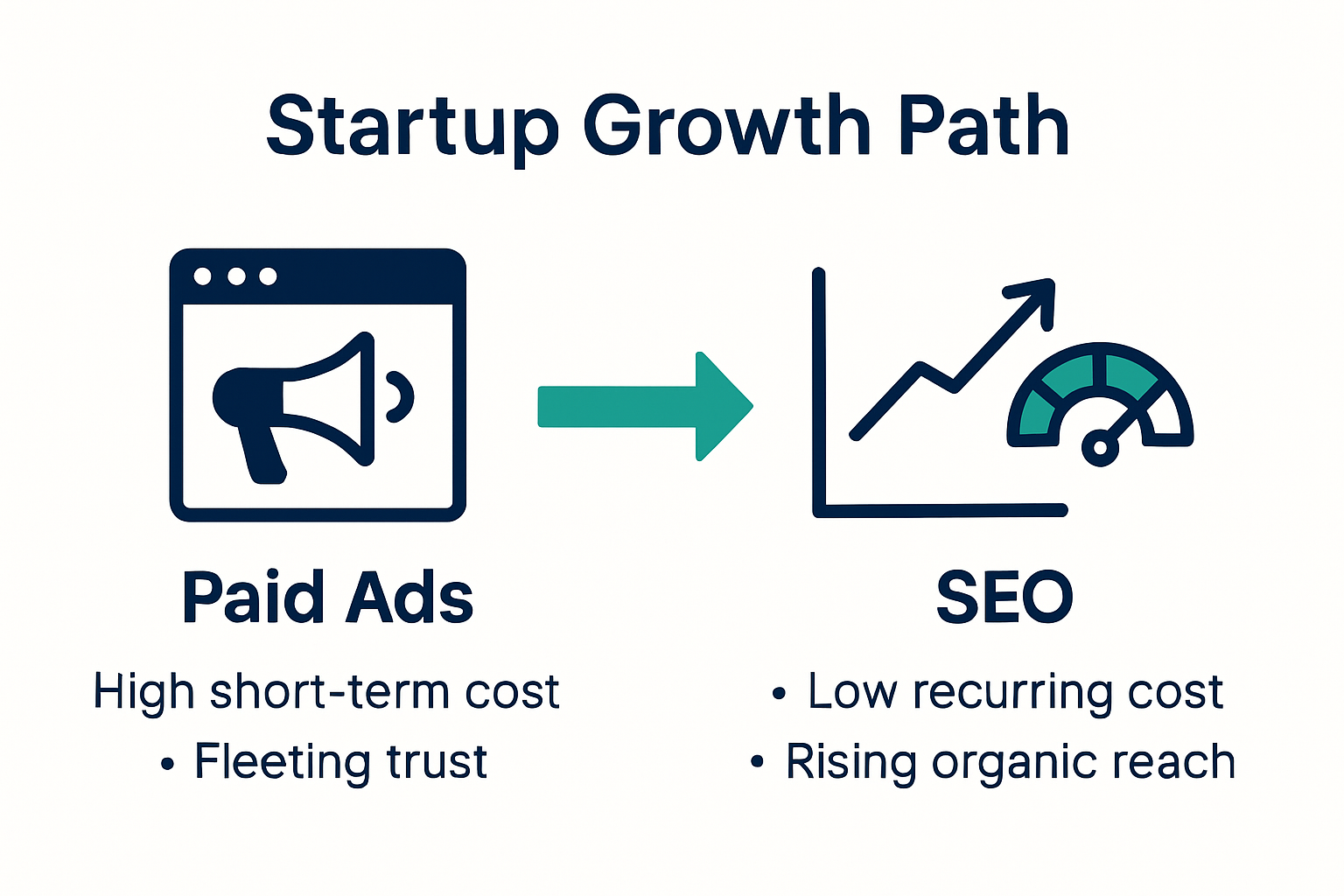
A picture that demonstrates the good and bad sides of SEO and paid ads for new businesses.
Our best SEO advice for startups guide is a great place to start if you're a new business searching for a complete plan for online success. It gives you useful advice to help you get started with optimizing your site. New firms can change their online potential and speed up their growth in a market that is becoming more digital by learning and using these tactics.
How SEO Works for Modern Startups
Why SEO for startups? SEO, or search engine optimization, is a digital environment that helps businesses get more exposure online and bring in more clients. SEO is different from ordinary marketing since it uses a complicated mix of technical optimization, content preparation, and user experience design to help firms find the right people and gain higher search engine ranks.
SEO can benefit new businesses, but a lot of things have to work together for it to do so. The first step is to do keyword research, which helps businesses find out what words and phrases their best customers use to search. After that, these keywords are carefully included in the website's content, meta descriptions, headers, and other technical parts that people can't see. Long-tail keywords are search queries that are less general and more precise than other search terms. These keywords are important for startups to pay attention to because they are strongly tied to what sets them apart.
These are the most important parts of SEO work for startups:
- Improving the technical side of a website. The site should load quickly, work well on mobile devices, have secure connections, and be easy to understand.
- It's important to make material that is useful, on topic, and answers people's inquiries.
- Linking Getting authoritative backlinks from trustworthy domains will make your domain seem more trustworthy.
- Keeping it easy to navigate your way around, keeping the information hierarchy apparent, and adding fun interactive aspects are all parts of user experience design.
Our Webflow SEO guide for SaaS companies provides all the information you need to make your platform work better for your business and receive more attention online.
Important SEO Plans and Tools
New businesses that want to do well in digital markets and have a strong online presence need to use SEO tactics. Modern optimization uses a mix of technical skills, content development, and strategic planning to help organizations cut through the noise of the internet and find their intended audience.
To do SEO right, startups need to know a few key strategic things. Businesses should undertake keyword research first to see how potential buyers look for things and what language they use. Making content is the next important step. Startups need to create content that is not only useful and ranks well but also answers users' problems and fits their needs.
Here are some important SEO recommendations to help a new business grow:
- Comprehensive research on keywords finding search terms that are highly specific to your business and are valuable yet not too competitive
- Fixing difficulties with the technology on a website, making sure that sites load quickly, work well on phones and tablets, and have a clear layout
- Marketing through content: Creating information that is helpful and useful to your audience and that is also authoritative
- Creating Links That Matter: Getting high-quality links from well-known websites in your field
- Watching how well things are going, using statistics to track SEO success, and making it better all the time
Our guide on generating content that ranks goes into greater detail for businesses that want a clear plan for how to do well in search engines. It tells you how to get more people to visit your site and bring in the right kind of traffic.
Common SEO Mistakes Startups Should Avoid
A lot of the time, new businesses make big SEO mistakes that can have a big effect on their online marketing. The SSBF Network says that if you want your business to stay open and be recognized online, you need to know about and prevent typical SEO blunders. Being strategically educated is the first step to avoiding problems with digital marketing.
According to the company's owner, effective SEO goes beyond simply improving the functionality of your website. It's also about making smart business choices and getting clients to trust you. Many new businesses hurt their online growth without meaning to because they don't understand all the problems that come with search engine optimization.
These are some frequent SEO mistakes that new firms should stay away from:
- Adding too many keywords in text that is hard to understand and use
- Not making it operate well on phones, not making websites that work well on all devices, and not loading quickly
- Having a content strategy that isn't consistent means having content that is low quality and doesn't give readers any value.
- Not paying attention to how to optimize for local search engines, and not using location-based marketing methods to gain customers from neighboring areas
- The website isn't operating correctly. Keeping websites that take a long time to load and are hard to use, which gets people mad.
To find out more about how startups can avoid these frequent SEO blunders, read our post on how to avoid them. It gives helpful tips on how to make the most of possible digital problems.
Unlock Startup Growth with Expert SEO Solutions
In a congested online market, every new business needs to find a method to stand out and earn people's trust. This article talks about common SEO blunders and how vital it is to keep making your site better, make sure the content is relevant to your audience, and link to your site in a way that makes sense to get the proper people there. If you're ready to get rid of your SEO confusion and grow your online presence, focusing on cheap marketing and improving the user experience can make a major difference.
You can take charge of your startup's digital future with unique Webflow development and growth automation solutions made just for you. Go to Progeektech.com right now to obtain a free audit and a discovery call that is customized just for you. Our team of experts can help you turn your SEO problems into chances to get more clients, move up in the rankings, and get more conversions. Don't wait; the success of your startup starts now.

Take control of your startup’s digital future with custom Webflow development and growth automation solutions tailored to your unique needs. Visit us today for a free audit and personalized discovery call. Start turning your SEO challenges into opportunities to rank higher, attract more clients, and increase conversions with expert guidance from our team. Don’t wait—your startup’s success begins now.
Frequently Asked Questions
What is SEO, and why is it important for startups?
SEO, or Search Engine Optimization, is a strategy to promote a business online that helps people find it and brings in the right kind of web traffic. It's important for new businesses since it helps them compete with bigger ones and win over customers.
How long does it take to see results from SEO efforts?
It usually takes a while for SEO to start working. After doing it regularly for four to six months, startups frequently experience big changes in their traffic and rankings.
What are common SEO mistakes startups should avoid?
Some common problems are stuffing keywords into your content, not making your site mobile-friendly, not having a clear content strategy, not paying attention to local SEO, and having a slow website. If you don't make these mistakes, your digital marketing will work better.
What are the key components of an effective SEO strategy for startups?
A good SEO plan for a new business should include a full keyword analysis, technical website optimization, creating high-quality content, developing links in a smart way, and keeping an eye on performance to see how things are going and make them better.
Conclusion: Start Strong, Scale Smarter with SEO
In today’s competitive digital landscape, SEO is no longer optional for startups—it’s the foundation for sustainable growth, brand visibility, and long-term customer acquisition. By understanding how search engines work, investing in strategic optimization, and building a strong content and technical SEO framework, startups can compete with industry leaders even on a limited budget.
If you’re ready to build real momentum, attract qualified leads, and scale your startup faster, Progeektech is here to help. Our startup-focused SEO strategies are designed to deliver measurable results and long-lasting growth.
Ready to accelerate your organic success?
Contact Progeektech today, and let’s take your startup to the next level.